What can and should the hospitality industry do to overcome this major issue?
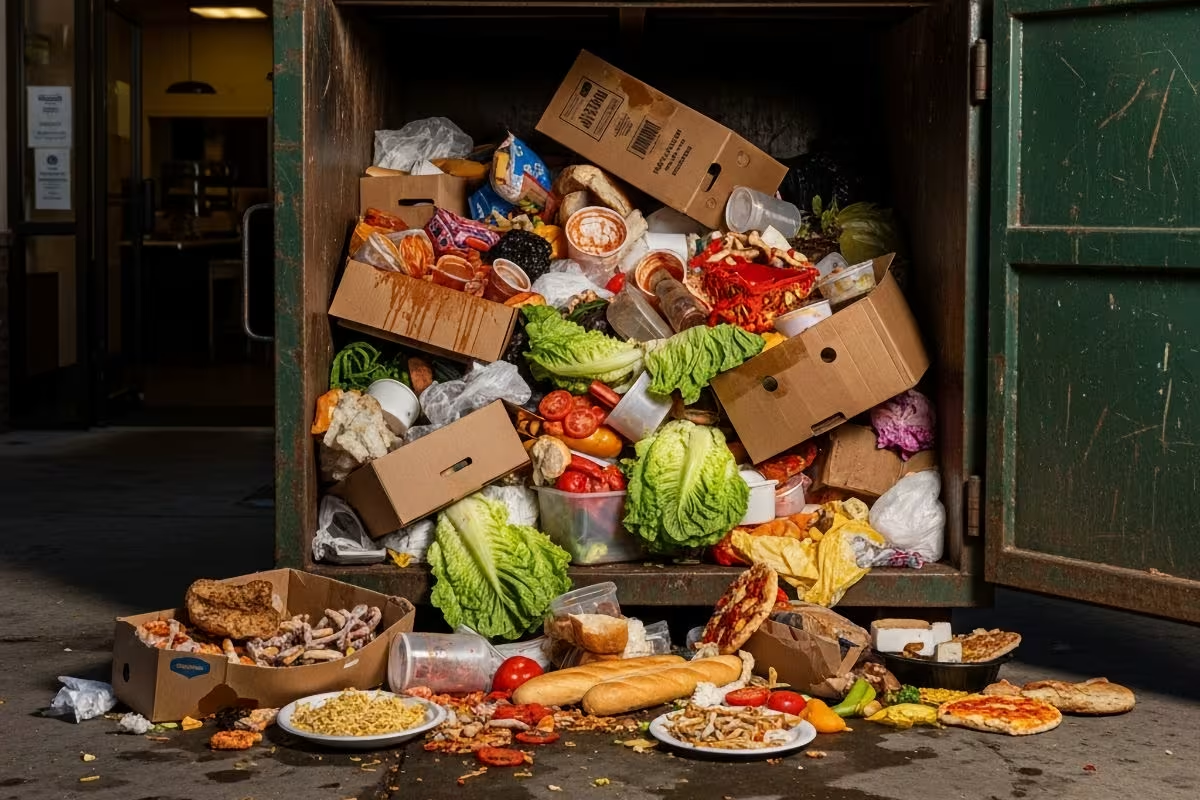
In the UK alone, in 2021 we threw away 10.1m tonnes of food a year[1].
WastED, the new pop up restaurant at Selfridges is 'exploring the gastronomic possibilities of the unlovely byproducts of food production', in a bid to not only raise awareness of how much food waste there is every year but how delicious dishes can actually be made out of it.
Food wastage is a huge problem for the hospitality sector, which is often flagged by clients who are keen to know how our systems can help play a part in eradicating this major issue. At Lolly, our goal is to help lean and dynamic small businesses across the hospitality sector run more efficiently and profitably.
Our much loved coffee shops can provide a good example of wastage. With hundreds or pre-packed sandwiches that have met their sell by date, the usual practice would be to just throw these out at the end of the day, and - at best - make paper-based notes on what went to waste. Our software system has the ability to log which products go to waste, so that trends can be picked up and - in this case - allow the coffee shop to identify best and worst selling lines so that they can adjust stock levels and minimise waste. They can log into the back office and access the till system to adjust stock levels - immediately.
Equally, members of staff can use the software to log spillages as wastage or where there is a tasting event. For this sector, there is a great emphasis on keeping track of the operation and close controls on stock levels, as well as the underlying profits. Most business do not realise how much food waste costs them. A 240 litre wheeled bin filled with food waste costs around £240 for food purchase costs and waste disposal alone. Just one bin of food waste per week across 52 weeks of the year could cost a business more than £12,000.
This is money that could be saved if a few things were done differently. Here are a few tips to help:
TOP TIPS ON PREVENTING WASTAGE
- Invest in a kitchen management system that has the ability to show you wastage patterns.
- When that system is embedded, use it - effectively. Don't let it sit there, make sure you put it to good use - and your business will reap the benefits.
- Make it your business to have wastage properly logged by all members of staff. Only then can you keep an eye on patterns, and also properly plan.
- Always try to keep on top of wastage; immediate visibility will help you to plan stock control levels.
- Get staff buy-in to the system - make sure they recognise its value, and use it properly.
[1] https://researchbriefings.files.parliament.uk/documents/CBP-7552/CBP-7552.pdf