It’s a packed Saturday night in a city centre pub with mobile orders stacking up and a relentless stream of tickets. Every second matters. One missed item or one delayed decision can ripple through the operation, turning steady flow into service breakdown. At the same time, rising National Living Wage pressures mean operators cannot simply add more staff to solve the problem. Instead, the focus must shift to extracting more productivity from existing teams. Speed of service becomes less about individual performance and more about how well the system supports decision making and workflow. This is where a kitchen display system proves its value. Rather than relying on reactive fixes, it provides a structured, scalable approach to managing throughput, helping operators maintain control during peak demand.
The Throughput Challenge in High-Volume Hospitality
Speed of service in high-volume hospitality is governed by clarity, prioritisation and visibility across the entire operation. It is not just about how many people are on shift, but how effectively they can act on the information in front of them. Traditional paper tickets or disconnected systems slow everything down. Staff must decipher handwriting, verbally confirm orders, and mentally juggle priorities. Fragmented setups, often created by stitching together multiple tools, introduce delays at every step. Without a single source of truth, kitchens rely on human intervention to coordinate workflow, which becomes increasingly fragile under pressure. The result is inconsistent service times and frequent bottlenecks during peak periods.
Peak-Time Ticket Congestion
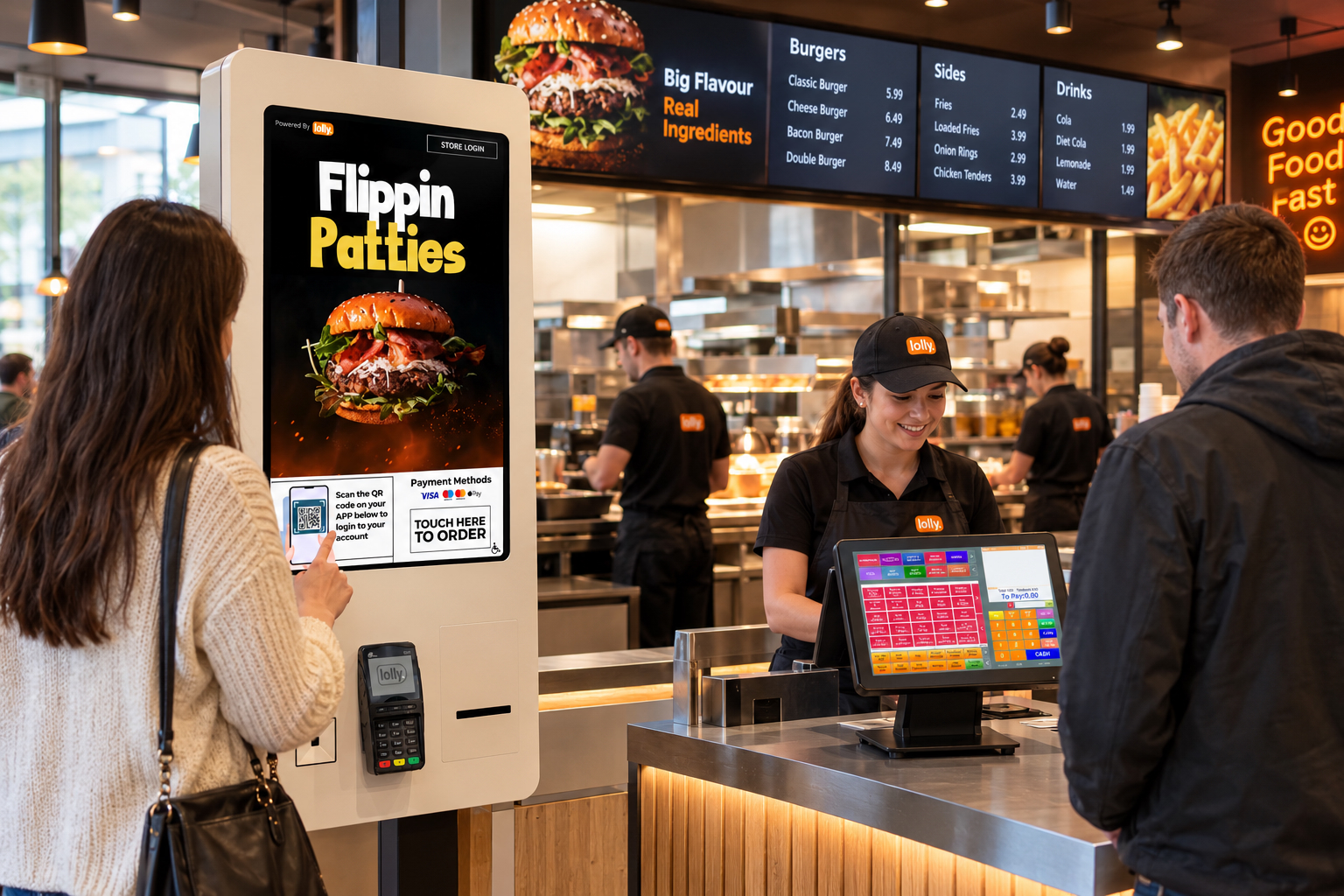
When orders from the bar, self-service kiosks and delivery platforms all converge, the kitchen can quickly become overwhelmed. Tickets arrive in bursts, often without clear sequencing or priority. Without structured flow control, teams are forced into reactive decision making, jumping between orders and risking delays or errors. This congestion not only slows production but also increases stress levels, which further impacts performance. In high-volume settings, unmanaged ticket flow is one of the primary causes of service breakdown.
How Lolly’s Kitchen Display System Improves Speed
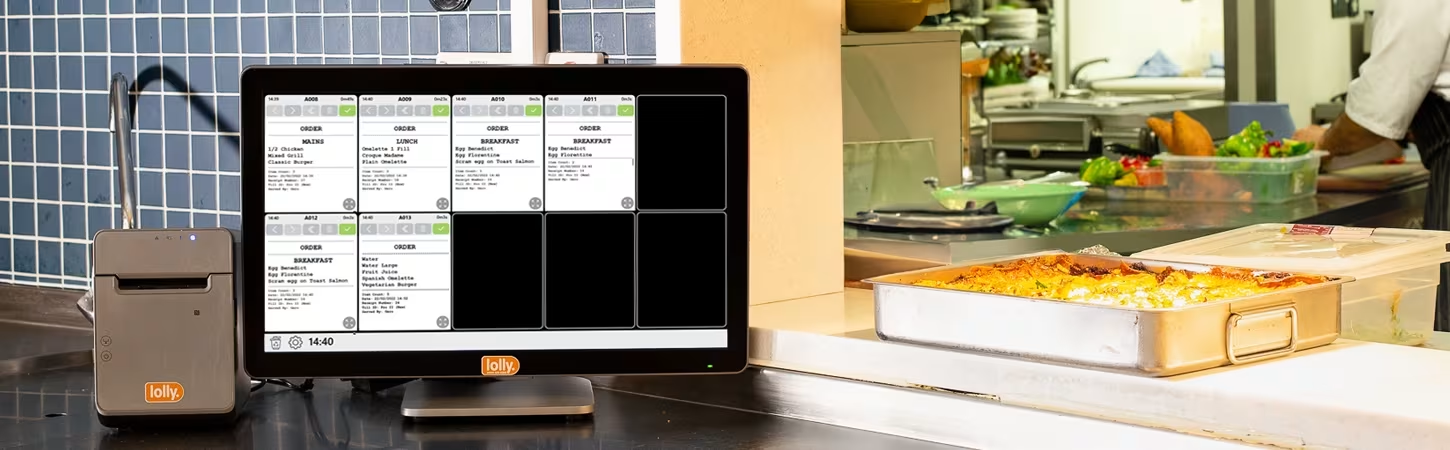
Lolly’s kitchen display system, integrated directly with EPoS, removes much of this friction by introducing structured order management. Orders flow digitally from the point of sale to clearly organised kitchen screens, eliminating manual handoffs. Each ticket is displayed in a consistent format, with visual cues that guide preparation and sequencing. This reduces cognitive load for kitchen staff, allowing them to focus on execution rather than interpretation. The system enforces order and rhythm, ensuring that throughput remains steady even as volume increases. By replacing fragmented processes with a unified workflow, it creates the conditions for faster and more consistent service.
Intelligent Prioritisation & Queue Management
A key advantage of Lolly’s system is its ability to prioritise orders based on service model. Dine-in, takeaway and delivery orders can be sequenced differently to reflect operational needs and customer expectations. This ensures that high urgency orders are not delayed behind less time-sensitive ones. During peak periods, this intelligent queue management maintains balance across channels, reducing the risk of one queue overwhelming the kitchen. The outcome is a more predictable and controlled service experience, even at maximum capacity.
Real-Time Visibility for Front & Back of House
Shared, real-time visibility across front and back of house is another critical factor in improving speed. Staff no longer need to rely on verbal updates or physical movement to check order status. Instead, everyone operates from the same live view of production progress. This reduces interruptions, minimises unnecessary communication and creates a calmer working environment. When teams can see exactly what is happening, they make faster, more confident decisions, which directly translates into improved service times.
Labour Efficiency & Orders Per Hour
Improving speed of service has a direct impact on labour efficiency. With a kitchen display system in place, operators can process more orders per hour without increasing headcount. This is particularly important in the UK, where rising wage costs and recruitment challenges continue to put pressure on margins. By streamlining workflows and reducing wasted effort, KDS enables each team member to contribute more effectively. Operators can model performance improvements by comparing orders processed per hour before and after implementation, often revealing significant gains. In this context, technology becomes a lever for sustainable efficiency rather than a cost centre.
Customer Experience & Revenue Impact
Faster service has a clear and immediate effect on customer experience. Shorter wait times reduce queue abandonment and improve overall satisfaction. In high-volume venues, even small reductions in average wait times can translate into higher throughput and increased revenue. For example, cutting wait times by just a few minutes during peak periods can enable additional table turns or more completed transactions at the bar. Customers perceive the operation as efficient and reliable, which encourages repeat visits. Over time, this consistency builds trust and strengthens brand reputation.
Data & Bottleneck Identification
An integrated KDS also provides valuable operational data that helps operators identify and address bottlenecks. Reporting can highlight slow stations, recurring delays or imbalances in workflow. For example, if data shows that a particular section consistently lags during peak periods, operators can adjust staffing levels or reorganise prep processes to compensate. This continuous feedback loop allows businesses to refine operations based on evidence rather than guesswork. Over time, these incremental improvements contribute to a more resilient and efficient kitchen.
Turn Efficiency into Advantage
Speed of service in high-volume hospitality is not simply a staffing challenge. It is the result of how effectively workflows are structured and managed. Without the right systems in place, even well staffed kitchens can struggle under pressure. Lolly’s integrated kitchen display system provides a scalable solution, bringing clarity, prioritisation and visibility to every stage of the process. By enabling controlled throughput and reducing bottlenecks, it allows operators to deliver consistent performance during peak periods. In an environment shaped by rising costs and high customer expectations, this shift from reactive staffing to structured systems is essential for sustainable success.