A familiar scene in UK hospitality: kitchens during peak service. Paper tickets stack up, orders are shouted across the pass and front of house and back of house scramble to stay aligned. Under pressure, even experienced teams can misread handwriting or duplicate orders through miscommunication. At the same time, National Living Wage increases and rising operating costs mean there is less room than ever for inefficiency. Every mistake carries a direct cost in wasted ingredients, lost time and customer dissatisfaction. In this environment, a kitchen management system is not simply a digital replacement for paper. It is a control mechanism that brings structure to chaos, reduces reliance on memory and verbal communication and protects margin by tightening both labour use and operational flow.
The Hidden Cost of Kitchen Errors
Small errors in the kitchen quickly accumulate into significant costs. A misread ticket or missed item typically results in a remake, slowing down service and increasing food waste. During a busy service, even one incorrect order per hour can compound into dozens across a week. Each incident impacts not only cost but also customer experience, particularly when delays ripple across other tickets. Without clear visibility and structured workflows, these errors become an accepted part of operations rather than a measurable and reducible expense.
Food Waste and Margin Impact
Margins in UK hospitality are already under pressure from supplier cost volatility and energy prices. Frequent minor mistakes, such as incorrect toppings or missed sides, directly erode these margins. While each error may seem small, the cumulative effect across a week or month is significant. A steady stream of preventable waste reduces profitability in a way that is often hidden from traditional reporting.
Labour Time Lost to Rework
Every remake requires both time and attention from kitchen staff, pulling them away from new orders and extending queue times. This creates a cycle where delays increase pressure, and pressure increases the likelihood of further mistakes. Over time, this leads to reduced throughput, higher stress levels and greater reliance on additional labour to maintain service standards.
From Paper Tickets to Structured Digital Workflow
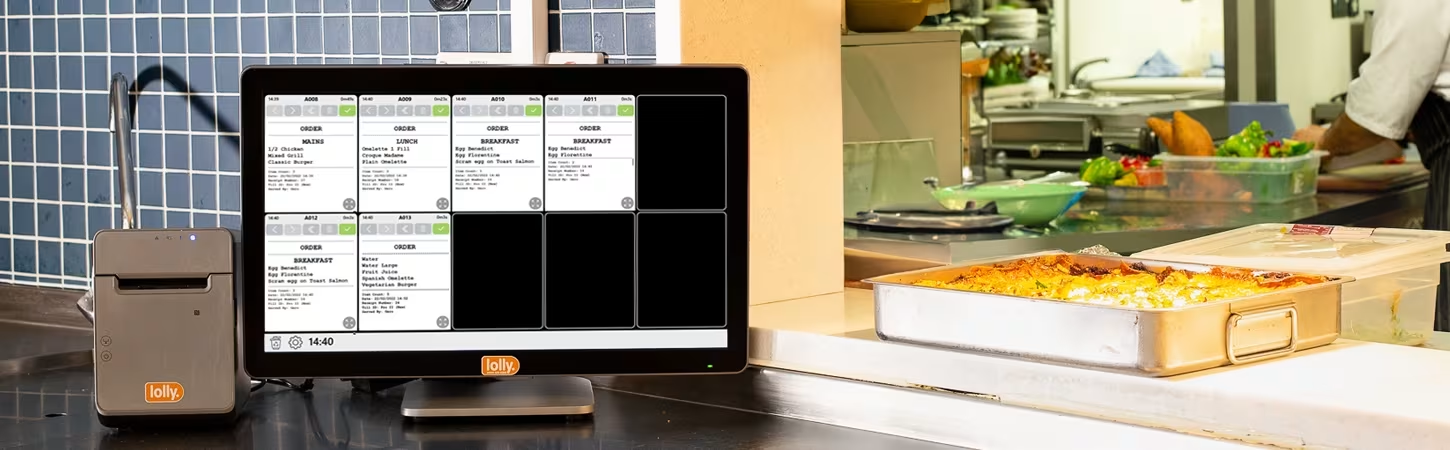
Lolly’s kitchen management system replaces manual ticketing with a structured digital workflow that brings clarity to every stage of service. When an order is placed, it is instantly sent to the kitchen display, where it appears clearly and consistently. Tickets are automatically prioritised based on timing and service rules, guiding the kitchen team on what to prepare next. As dishes are completed, they are marked off in real time, keeping the entire operation aligned from front to back of house.
Real Time Prioritisation and Visibility
With all tickets visible on screen, kitchen teams no longer need to rely on verbal updates or visual scanning of paper slips. Real time prioritisation ensures that urgent tickets are highlighted and delays are easy to spot early. This reduces interruptions and confusion, creating a calmer and more focused environment during peak periods.
Native Integration with Lolly EPOS
Because Lolly’s KMS integrates directly with Lolly EPOS, orders flow automatically into the kitchen without any re-keying or duplication. Whether an order is placed at the till, via a self-serve kiosk or through an app, it is routed into a single unified kitchen view. This removes opportunities for human error at the point of entry and ensures consistency across all ordering channels.
Labour Optimisation Under UK Wage Pressure
As National Living Wage rates continue to rise, operators are under increasing pressure to do more with the same or smaller teams. A structured kitchen workflow enables staff to work more efficiently, reducing idle time and unnecessary movement. By improving clarity and reducing rework, the same team can process more orders per hour without compromising quality. This allows operators to manage labour costs more effectively while maintaining service standards.
Data, Bottleneck Identification and Performance Insight
A digital kitchen system also generates valuable operational data. Operators can track average order times, identify peak periods of strain and pinpoint where delays occur in the workflow. With the option to share data with head office, multi site businesses gain a consistent view of performance across locations. For example, if data shows consistent delays during a specific time window, staffing levels or prep processes can be adjusted to improve throughput and reduce pressure on the team.
ROI Modelling
The return on investment for a kitchen management system can be modelled through a combination of reduced remakes and improved labour efficiency. For instance, if a site reduces five remakes per day, the savings include both ingredient costs and labour time. Multiply this across several locations and the impact becomes substantial. Beyond direct costs, there is also the opportunity value of faster service and improved customer satisfaction, which supports repeat business even if it is harder to quantify precisely.
Conclusion
Kitchen management today is about precision, efficiency and control. Paper based systems introduce variability and increase the likelihood of errors at a time when operators can least afford them. Lolly’s integrated approach connects EPoS, ordering channels and kitchen workflows into a single streamlined system, helping teams reduce waste, improve throughput and manage labour more effectively. For UK hospitality businesses facing rising costs and growing service expectations, a kitchen management system is not just an upgrade. It is a practical step towards protecting margin while delivering a more consistent customer experience.