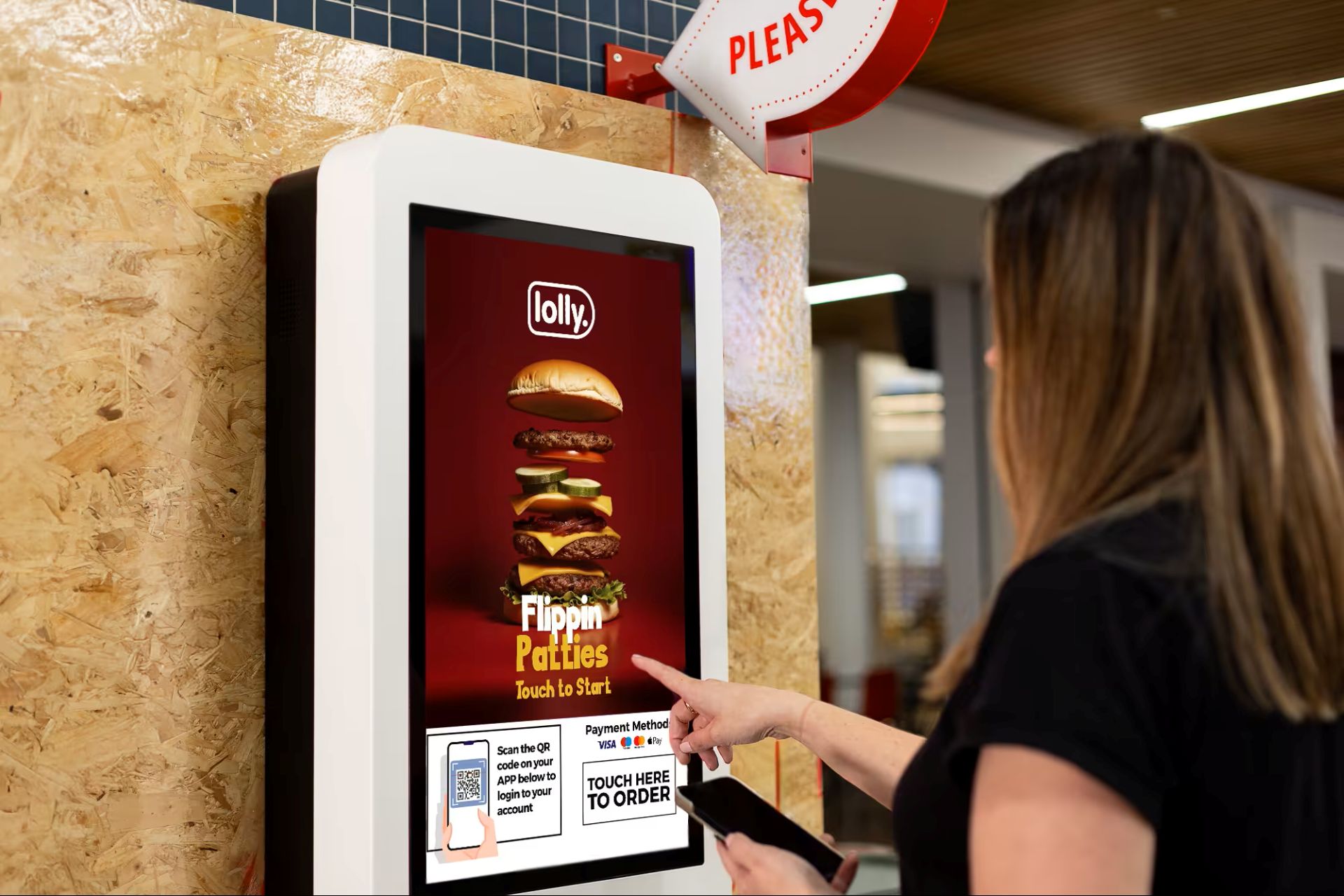
Picture a busy quick service restaurant at peak. Multiple customers are placing orders simultaneously through kiosks, payments are being authorised in seconds and orders are flowing through to the kitchen. On the surface, everything appears seamless. Behind the scenes, however, three critical processes must remain perfectly synchronised: payment confirmation, EPoS transaction recording and order handover into the kitchen.
When these elements are not fully aligned, issues arise quickly. Payments may be taken without corresponding sales records, orders may fail to reach the kitchen or reconciliation at the end of the day becomes inconsistent and time consuming. These gaps are not simply technical inconveniences. They directly affect financial accuracy and customer trust.
Integration is therefore not just about connectivity. It is about ensuring that every transaction is captured, verified and completed across systems in real time. When kiosks, EPoS and payment systems are natively unified within a platform such as Lolly, operators gain a dependable foundation for accurate reporting, streamlined operations and confident decision making.
The Three-Layer Architecture of Kiosk Integration
To understand integration, it helps to break it down into three simple layers:
1. Customer interface
This is the kiosk itself. It manages menu display, order customisation and user interaction.
2. Transaction layer (EPoS)
This is the operational core. Every order must be recorded here as the definitive sales record.
3. Payment layer
This includes the payment gateway and acquiring bank, which handle card authorisation and settlement.
While it can be tempting to view these as separate systems, in practice they must operate as a single flow. An order is only complete when all three layers agree on its outcome.
Real-Time Transaction Recording in EPoS
Every kiosk order must be passed instantly to the EPoS. This ensures:
- Accurate sales reporting across all channels
- Real time stock deduction
-Alignment between order volume and revenue
The EPoS effectively becomes the single source of truth. Whether an order is placed at a counter, kiosk or online, it should be captured centrally.
Without this centralisation, discrepancies quickly emerge. For example, card payment totals may not match recorded sales, making end of day reconciliation unreliable. Integrated systems remove this risk by ensuring that each transaction is posted once, consistently and immediately.
Payment Authorisation & PCI Compliance
Payment processing is a critical supporting element. UK hospitality operators must ensure that all payment data is handled securely in line with PCI DSS requirements.
Integrated systems simplify this by ensuring:
- Payment authorisation is directly linked to the sale record
- Sensitive card data is never exposed across fragmented systems
- Transaction logs are consistent and auditable
When kiosks and payment systems are loosely connected, reconciliation becomes more complex. Operators may need to manually cross check payment gateway reports against EPoS data, increasing administrative time and the risk of discrepancy.
Reconciliation & End-of-Day Accuracy
Reconciliation is where integration delivers immediate value.
In a fully integrated setup:
- Total card payments match total EPoS sales for kiosks
- Each transaction has a clear audit trail
- Variances are rare and easy to investigate
Without integration:
- Kiosk records 500 orders
- Payment system shows 495 successful transactions
- Five transactions require manual investigation
With integration:
- Each successful payment automatically creates a matching EPoS entry
- Failed transactions never appear as completed orders
- End of day totals align without manual intervention
The difference is not just operational efficiency. It is confidence in the integrity of financial data.
Handling Refunds, Voids & Exceptions
Operational reality includes refunds, cancellations and voids. Integration ensures that these events are handled cleanly across all systems.
In a unified environment:
- A refund initiated in EPoS triggers a corresponding payment reversal
- Voided orders are removed consistently from both sales and payment records
- Partial refunds and adjustments are correctly logged and reconciled
- Without this alignment, operators face mismatched records, increased administration and potential customer disputes.
Operational Resilience & Downtime Mitigation
Fragmented systems often mean multiple vendors, multiple support channels and slower issue resolution. When something goes wrong, identifying the root cause can be difficult.
A unified platform improves resilience by:
-Reducing dependency on separate integrations
- Providing a single point of accountability
-Enabling faster diagnosis and resolution
If a kiosk stops sending orders to the kitchen, in a fragmented setup, responsibility may sit between kiosk provider, payment provider and EPoS vendor. In a unified system, the issue can be identified and resolved within one ecosystem. This both reduces downtime and protects revenue during peak trading periods.
Commercial Implications of Poor Integration
Poor integration is not just untidy from a systems perspective. It has measurable commercial consequences.
Financial discrepancies increase audit risk, manual reconciliation consumes management time and inaccurate reporting affects decision making
At a more strategic level, fragmented systems limit visibility. Operators cannot confidently assess performance, which undermines efforts to optimise labour, pricing or menu design.
In contrast, strong integration protects margin by ensuring that every transaction is recorded accurately and accounted for.
Conclusion
Self service kiosk integration is fundamentally about more than connecting systems. It underpins financial accuracy, compliance and operational confidence. When kiosk, EPoS and payment layers operate as a single, unified flow, every transaction becomes reliable, traceable and easy to reconcile.
For UK hospitality operators, this translates into reduced administrative burden, stronger data integrity and improved resilience during peak trading. It also enables clearer insight, allowing businesses to make better informed commercial decisions.
Lolly’s unified approach ensures that kiosks are not isolated tools but part of a cohesive platform. The result is a system that supports accuracy, accountability and long term operational stability in a demanding market.

.avif)