By Peter Moore, CEO, It’s Lolly
AI is one of the hottest topics right now – across almost every industry. The opportunities and potential it can offer are endless. It’s exciting to be part of this new and exciting revolution.
So far…
In the hospitality sector we have yet to see any major AI products making a big difference right now. Biometrics, as an example, are taking a number of forms, from facial to finger-print recognition, the latter providing better service, individualisation and security. However, few programmes and solutions are in mainstream use. So far they only offer an interesting insight into some exciting and experimental possibilities, but, as yet, no day-to-day changes.
That is not to say these technologies will not become mainstream or support the growth, development and improvement of the hospitality sector.
AI Implementation
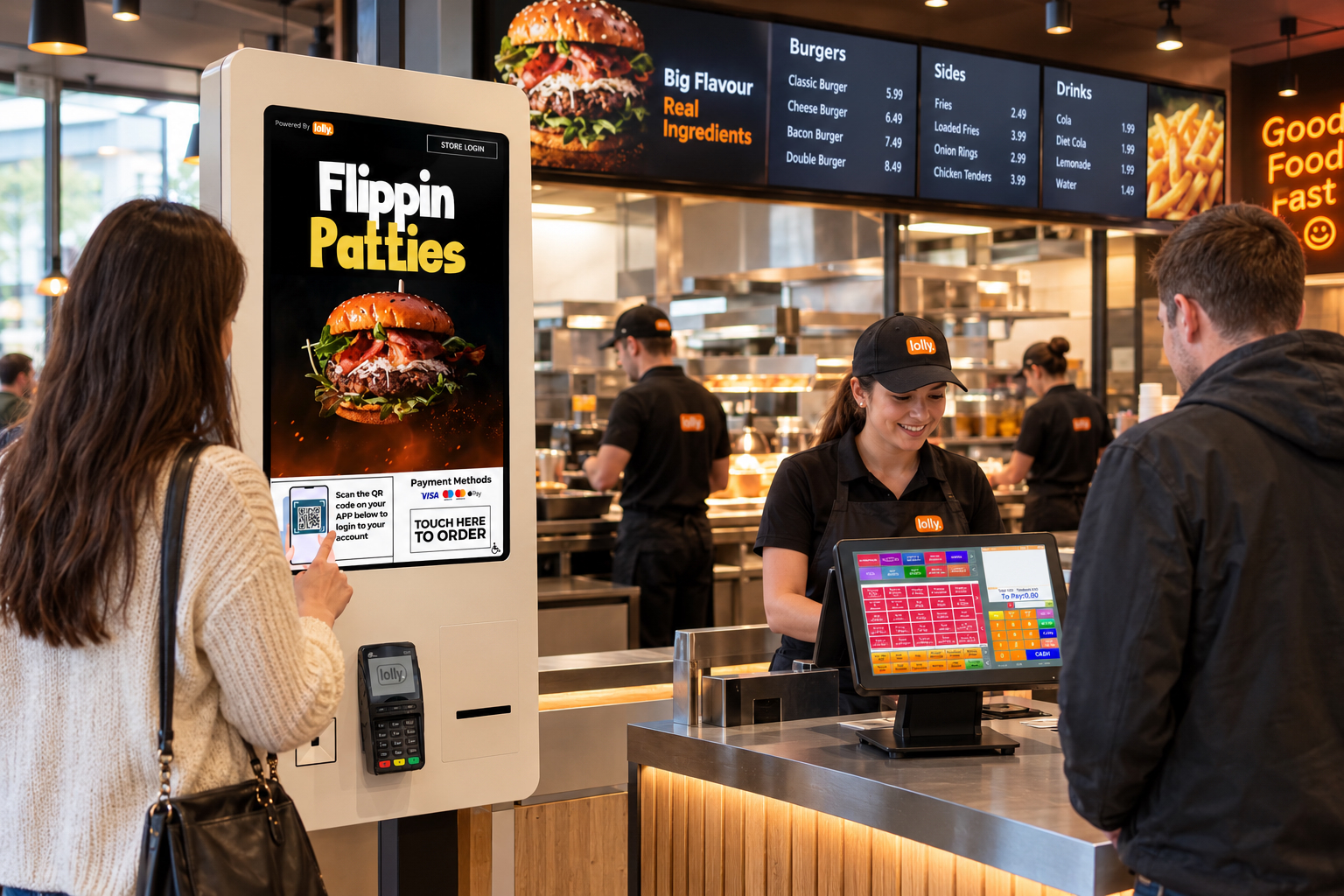
Some companies have incorporated AI into their systems, and through making use of data analysis, in the background, these trials are already beginning to make small changes. However, I’d argue that in order to move forward AI technologies need to be incorporated into front-of-house technology. This will then result in tangible changes for staff and customers – offering better, more customised service levels. Mass market and global adoption will take time, but things could move rapidly given the focus on AI today.
Facial recognition has several limitations, and has resulted in some, not entirely unwarranted, privacy and security concerns from individuals and the media. We will see this technology introduced in the future as a form of biometric payment, but not without legislation to protect the privacy of customers. Facial recognition is in use in China with ‘smile to pay’ systems in QSR and fast food restaurants. However, whether this technology will meet with the same reception in the UK or Europe is yet to be seen.
Another restriction to the integration of facial recognition purchasing is current legislation that biometric payments still need to be authenticated in two forms. For example, a customer must use both their face and their fingerprint in order to pay. For many people, providing fingerprints or vein in fingers/hand information feels less intrusive.
Once card schemes and companies can assure customers of the security of paying in this two-pronged manner, that they are adhering to law, and countering the GDPR issues that arise, I believe that facial recognition will become mainstream.
Data
AI data analysis is set to revolutionise the customer experience within the hospitality sector. Greater personalisation will be possible. By working to identify individual and group behaviours the algorithms will learn and be able to profile customers, from allergens to calorific content. Loyalty will become almost subliminal.
With customer permission we can improve their hospitality experience through data analysis, from entering the environment, through to purchasing. Systems will begin to machine learn and recognise habits, likes and dislikes.
These smart systems will help develop better menu navigation, menu options and speed up processes for staff. They will also reduce wastage by improving accuracy, resulting in greater consistency for businesses and customers.
Consumers need to embrace and accept the technology to yield the benefits, as the more that is shared the more precise and intelligent these systems can become. Additionally, as a result of this increased data, chatbots and other machine learning and support systems will all come into the hospitality space. Companies with outdated and legacy servers and systems will face challenges as AI becomes more widespread. It will become vital for POS and payments providers to stay in close communication with clients to ensure no one gets left behind.
Conclusion
It is inevitable that AI will increasingly become a part of our lives in the future, making the hospitality environment more efficient and more effective.
Robot waiters won’t be stepping in to replace humans and the service they are offered. Instead they will help to redefine the role of the human within the hospitality space – helping them to focus on back of house and data mining to create the highest possible levels of service, with reduced wastage and improved margins.
We are not yet seeing the benefits that AI could offer to both businesses, staff and customers. We are just at the beginning of the journey for AI in hospitality as we work to develop these technologies to become mainstream.
However, it is important to be cautious that we don’t view AI as either an immediate or miracle solution to improving services, or personalisation of the customer experience. Introducing legislation and creating a secure environment in which these technologies can be integrated is crucial. Customers need clarity and security at every stage.
As hospitality professionals we must educate ourselves and integrate AI where we can see it will have tangible benefits. There is no point purchasing technology for technology’s sake. We must at all times think about the customer in our own evolution.