Why does EPoS to kitchen system integration matter?
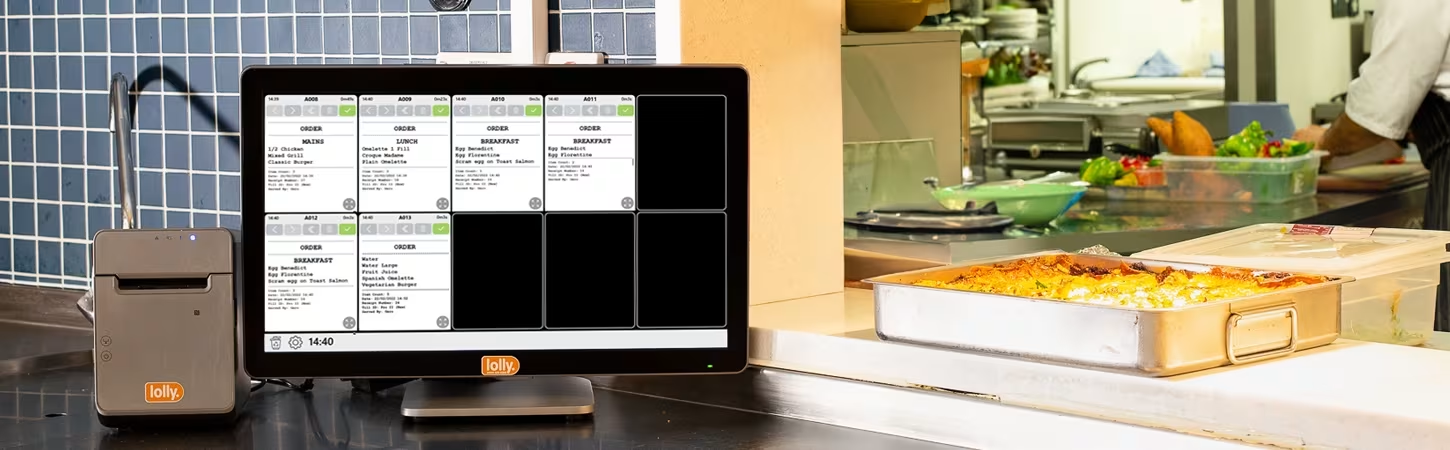
There’s a common assumption in hospitality operations that if orders appear on a kitchen screen, then the systems behind it must be integrated. On the surface, this feels logical. The order has travelled from the till to the kitchen, so the job must be done. In reality, this assumption can create risk. During peak periods, when order volume increases and pressure builds, weaknesses in system architecture start to show. Duplicate tickets, missing modifiers and reporting inconsistencies often emerge at exactly the moment operators can least afford them. What looks like integration is sometimes little more than a basic connection passing partial information downstream. This article aims to clarify what true integration actually means, not at a technical level, but at an operational one. Understanding the architecture behind EPoS and kitchen management systems helps operators make better decisions about reliability, performance and long-term scalability.
What Integration Really Means (Beyond Orders Appearing on a Screen)
True integration is not just about visibility of orders. It is about structured data exchange, consistency across systems and real time synchronisation. In a native environment, EPoS and kitchen systems share a common data model, meaning every item, modifier and price is understood in exactly the same way at every stage of the journey. By contrast, patchwork integrations often rely on APIs to pass simplified data between systems that were never designed to work together. This can result in gaps, mismatches and the need for manual reconciliation. In simple terms, native integration speaks one language across the entire platform, while bolt on systems translate between multiple dialects. That translation layer is where errors and delays frequently occur.
How does structured order data and field mapping work?
For integration to work properly, every element of an order must be mapped correctly between systems. This includes menu items, modifiers, allergens and pricing structures. A useful way to understand this is to consider a customised burger. If a customer must choose a roll and a patty, and can then add combinations such as sauces, toppings and cheese options, complexity grows quickly. With options like white or granary bread, one or two patties, multiple condiments and mutually exclusive cheese choices, there can be hundreds of possible variations. A properly integrated system ensures that each of these components is tracked individually as well as being recorded as a complete item. This allows the kitchen to see exactly what needs to be prepared while also enabling accurate reporting on ingredient usage and popular configurations. Without precise field mapping, these variations can easily become distorted or lost in translation.
Real-Time Synchronisation vs Batch Updates
Real-time synchronisation is critical in high volume environments. When an order is placed, any delay in transmitting that information to the kitchen creates friction. Batch updates, where information is sent at intervals rather than instantly, can disrupt workflow. During peak service, even small delays can compound, leading to queues forming in both the front and back of house. Real-time integration ensures that every order, update or cancellation is reflected immediately across the system, keeping teams aligned and responsive.
Should you choose a native ecosystem or bolt on architecture?
The difference between a native ecosystem and a bolt-on architecture becomes most visible under pressure. In a fully integrated platform like Lolly’s, EPoS and kitchen management systems are designed to work together from the outset. Updates are coordinated, data structures are aligned and performance is optimised across the stack. In contrast, stitched together solutions depend on multiple vendors maintaining compatibility over time. This increases the risk of version conflicts, where one system updates and another does not, creating instability. It also introduces more points of failure, each of which can impact service.
Who is responsible for support and accountability?
Support structures reflect these architectural differences. In a native ecosystem, there is a single point of accountability. If something goes wrong, one provider owns the issue and resolves it. In multi vendor setups, responsibility can become fragmented, with each provider pointing elsewhere. This slows down troubleshooting and can extend downtime, particularly during critical trading periods. For operators, clarity of ownership is not just a technical benefit, it is an operational safeguard.
Reporting Cohesion & Single Source of Truth
One of the most significant advantages of integrated architecture is reporting cohesion. When EPoS and kitchen systems share the same data foundation, sales, production and margin reporting align cleanly. Operators can trust that what is sold matches what is produced and what is recorded financially. This creates a genuine single source of truth. For example, if service times are slowing at a particular station, unified reporting can highlight the issue clearly, allowing operators to adjust staffing or prep processes with confidence. Without this cohesion, discrepancies between systems can obscure the real cause of performance issues.
How do integrated systems improve resilience and continuity?
System resilience is essential in high volume UK hospitality environments. Busy trading periods leave little room for technical failure. Unified platforms reduce the number of dependencies and therefore the number of potential failure points. They can also be designed with built in failover mechanisms, ensuring continuity if part of the system encounters an issue. In contrast, multi-vendor architectures rely on each component functioning correctly in sequence. If one link breaks, the entire chain can be disrupted. A resilient architecture provides stability and confidence, even during the busiest services.
Commercial Implications of Architecture Decisions
Architecture decisions have direct commercial consequences. A well integrated system reduces errors, improves speed of service and lowers the operational overhead associated with managing multiple tools. This translates into more efficient labour usage, higher throughput and clearer margin visibility. Conversely, poorly integrated systems can create hidden costs through inefficiencies, rework and support complexity. For operators, investing in the right architecture is not just a technical choice, it is a strategic one that impacts profitability and scalability.
What should operators take away from integration architecture?
The way EPoS and kitchen systems are connected has a direct impact on day-to-day operations. Integration is not simply about getting orders onto a screen, it is about ensuring that data flows accurately, instantly and consistently across the entire platform. Native architecture delivers clarity, cohesion and resilience, while bolt on approaches often introduce complexity and risk. For UK hospitality operators facing growing pressure on margins and performance, these differences matter. Lolly’s integrated EPoS and kitchen management system is designed to provide a reliable foundation, supporting efficient service, accurate reporting and confident decision making, even in the most demanding environments.