In a high-volume quick service restaurant or busy pub, the pressure on teams during peak service is immense. Customers move quickly, orders stack up and every inconsistency becomes a friction point. Yet many operators still rely on digital menu boards that operate separately from the tills and kitchen systems behind them. A screen might show outdated prices, a promotion may not be reflected at the point of payment and a kitchen can be caught off guard when signage triggers a sudden surge in demand.
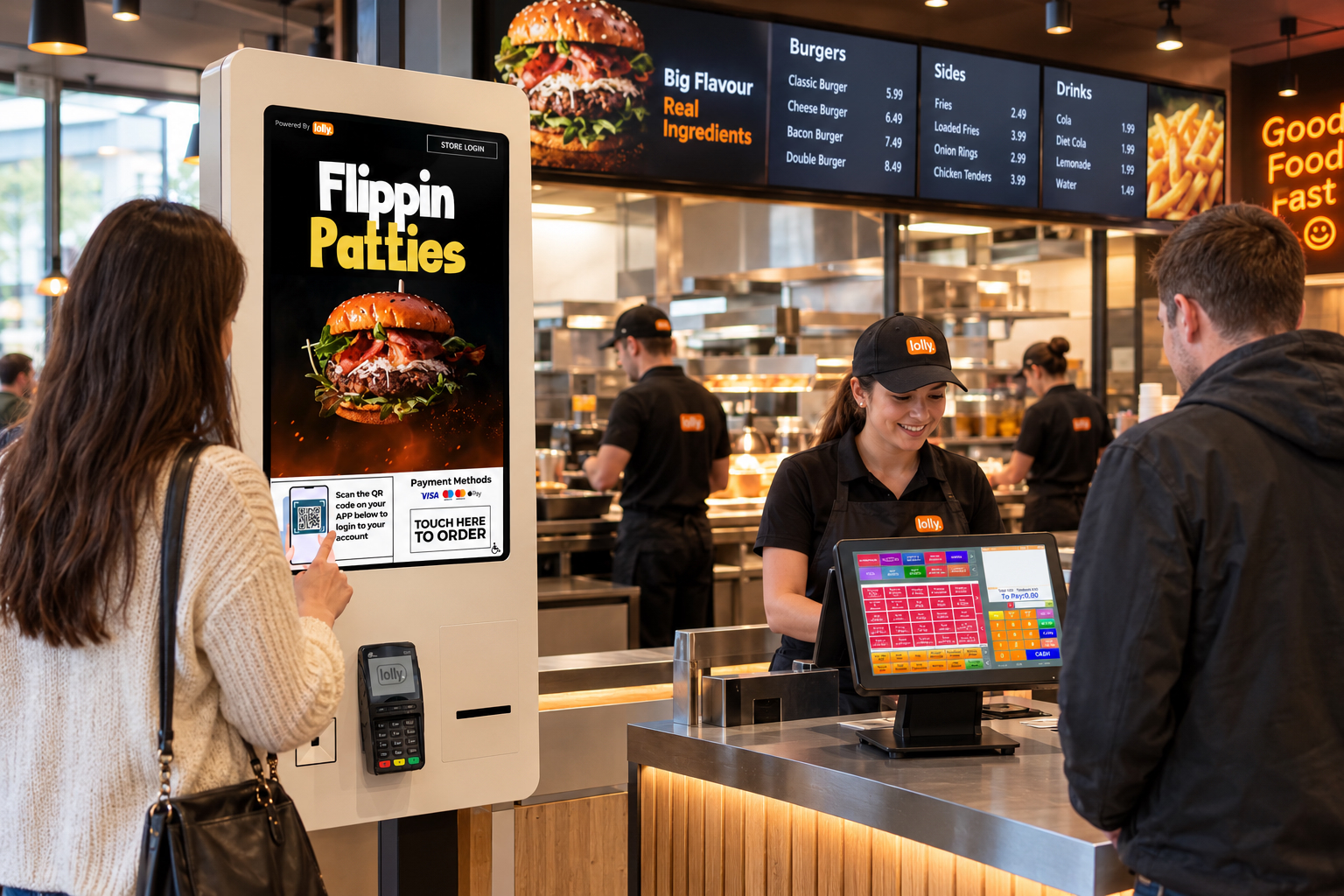
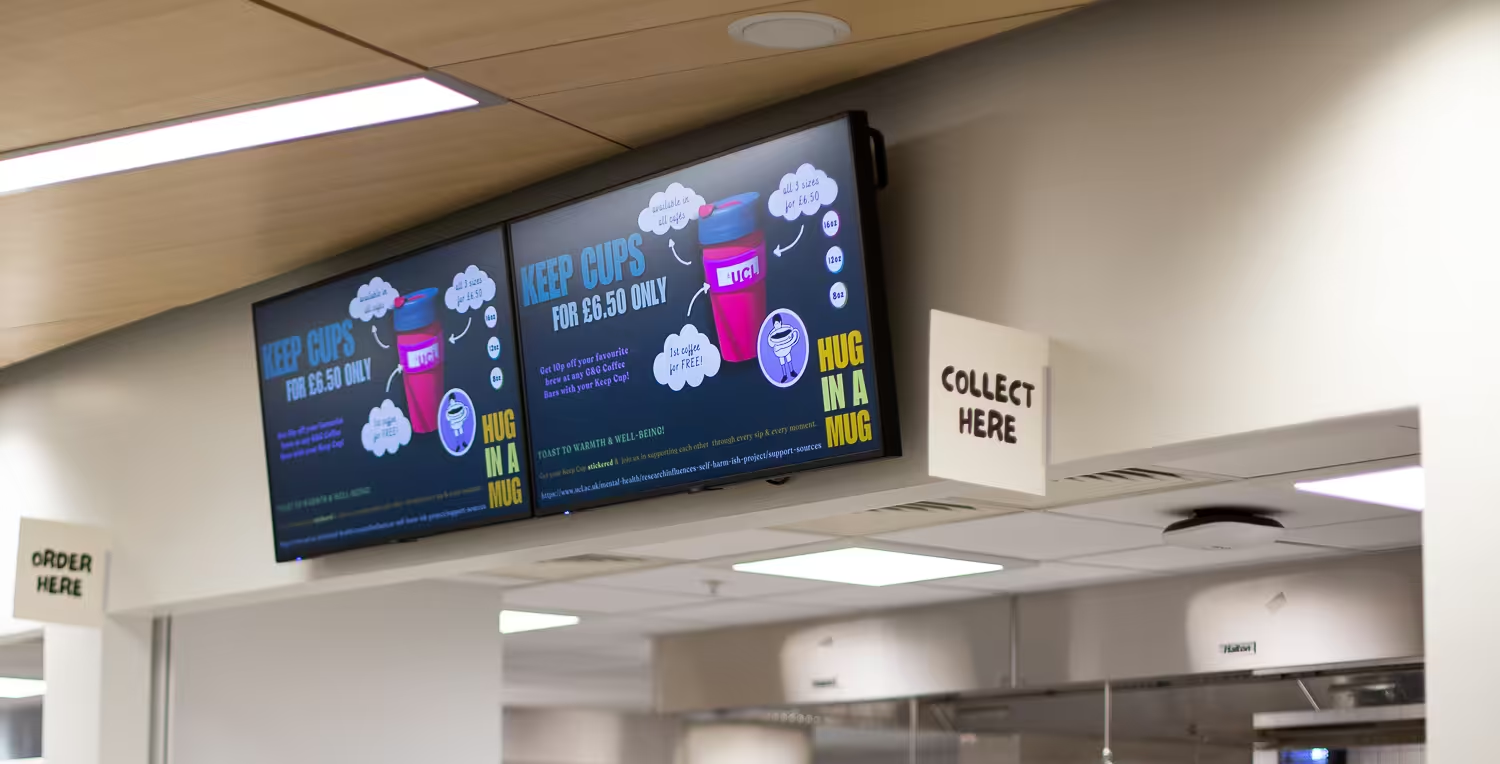
This is familiar territory for multi‑site operators such as Sandpiper Gibraltar. Through their partnership with Lolly, Sandpiper rolled out a fully integrated set of customer facing and operational touchpoints across its venues. These include customer facing display screens showing basket contents and promotional content, kitchen display screens replacing paper tickets to streamline barista and kitchen workflows and digital menu boards that are updated quickly and consistently through a user friendly portal. When delivered as a single connected ecosystem rather than stand alone systems, complexity is reduced and efficiency becomes repeatable at scale.
The real differentiator is not the brightness of the display, but the integration beneath it. When digital signage is linked directly to EPoS and kitchen systems, information flows cleanly from front of house to back of house and up to head office. Lolly’s integrated ecosystem delivers this continuity through a single smart platform, managed centrally within Lolly HQ.
The Operational Risk of Standalone Digital Signage
Many providers still treat digital signage as a marketing add on rather than an operational system. When screens operate independently of EPoS, the burden falls on site staff to keep information aligned. This leads to price mismatches between the display and the till, manual content updates that are easily forgotten and no clear audit trail to confirm what was shown at a particular moment. It increases compliance exposure, especially around pricing accuracy and allergen clarity.
Without integration, the operator assumes all the risk while the technology delivers only cosmetic value.
Promotional Overload Without Kitchen Visibility
Running a promotion from a screen alone can also create operational strain. If the kitchen system has no awareness of the expected uplift, teams may be blindsided by a sudden spike in orders. This can cause bottlenecks, reduced throughput and customer frustration, all triggered by a disconnected display.
How real-time EPoS sync keeps signage accurate
With Lolly, menu data, pricing and promotions sync directly from EPoS to digital signage. This removes the need for duplicate data entry and ensures the customer sees exactly what the system will charge. Updates made in Lolly EPoS are pushed to screens in real time, strengthening governance and reducing the risk of human error.
Centralised Control Across Multi-Site Estates
Head-office can adjust pricing, schedule campaigns and manage visual consistency across the entire estate from one place. Seasonal items, VAT rule changes or promotional rotations can be pushed instantly, with confidence that every branch is aligned.
How Linked Systems Balance Front of House and Kitchen Demand
When signage is integrated with EPoS and kitchen systems, operators gain visibility of the operational impact of every promotion. A customer sees an offer, places an order and the ticket flows automatically to the kitchen management system. The kitchen prioritises production based on live demand rather than relying on assumptions or manual communication.
Managing Peak-Time Throughput
During peak periods this integration removes friction. Staff are not re-keying content, correcting errors or cross checking pricing. Instead, orders move smoothly through the system, allowing teams to maintain speed and consistency even under pressure.
What integrated reporting reveals about performance
Integrated signage and EPoS also provide a clearer picture of performance. Operators can see how a promotion influenced order volume, margin and time of day demand. This helps refine future campaigns, improve profitability and reduce waste. When display, transaction and production systems share the same data, the insight becomes more reliable and actionable.
Measuring the Commercial Gains of Integration
While specific figures may vary, the efficiency gains are tangible. Centralised updates reduce hours spent on manual changes across sites. Eliminating pricing errors protects margin, particularly for multi site operators with frequent cost fluctuations. There is also a measurable uplift when promotions display accurately and are fully aligned with the EPoS journey. Even a simple ROI example shows the impact: removing ten minutes of manual updates per site per day across ten locations saves more than fifty hours of labour each month.
Why Integration Unlocks the Real Value of Digital Signage
Long term value in digital signage does not come from screen quality or hardware choices. It comes from integration. When signage is connected to EPoS, kitchen systems and reporting tools, operators gain operational continuity from the customer interface to the transaction layer and through to back of house production. Lolly delivers this by unifying the journey within a single platform, giving operators clarity, control and the confidence that every site is working from the same source of truth.