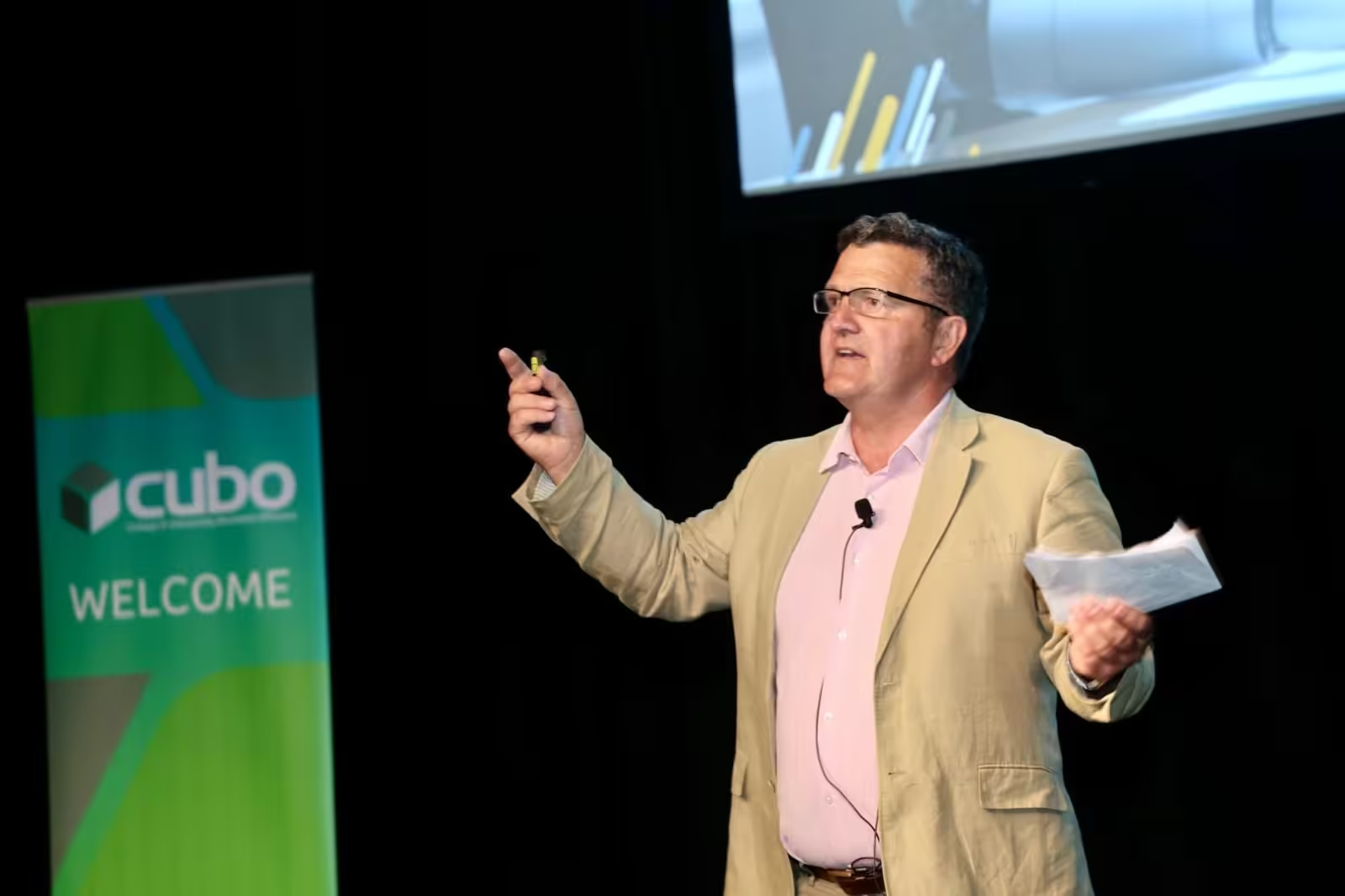
Peter Moore at Lolly reflects on the hospitality technology landscape of 2025 and looks ahead to the realities shaping 2026
As the hospitality sector moves through another year of rapid technological evolution, one thing has become clear: while innovation continues at pace, the gap between promise and real-world delivery is widening. 2025 has been dominated by conversation, ambition and expectation, but 2026 will be defined by outcomes.
AI - turning expectation into delivery
Artificial intelligence has unquestionably been the loudest voice in hospitality technology over the past year. Almost every provider has positioned it at the centre of their offering, promising transformation, efficiency and insight. However, despite the noise, genuine, deployed AI solutions that are driving measurable change remain limited.
Many organisations have focused on future roadmaps rather than present delivery, creating an industry-wide sense of anticipation that has yet to be fully realised. As we move into 2026, operators will become far more selective, prioritising solutions that are proven, practical and capable of generating real operational impact, rather than aspirational concepts.
Ethical AI and the influence of the Alpha generation
One of the most important shifts emerging beneath the surface is the growing influence of ethics in technology adoption. This change is being driven not by regulation alone, but by the next generation entering the purchasing cycle.
Generation Alpha (those born from the early 2010s onwards, now beginning to influence purchasing decisions through family and education) in particular, places significant value on environmental impact, transparency and corporate responsibility. For them, sustainability and ethics are not marketing messages; they are decision-making factors. Brands that fail to demonstrate responsible use of technology, data and energy will increasingly be overlooked, regardless of their size or heritage. As a result, AI adoption in 2026 must be as much about how technology is used as what it delivers.
Robotics, digital signage and shifting expectations
Different technologies are progressing at varying speeds, often reflecting where the industry is able to generate the most immediate value. Service robotics continues to evolve, with adoption moving forward in a more considered and targeted way as operators focus on long-term integration, operational fit and return on investment. While widespread rollout will take time, robotics remains an important area of development with clear potential as the technology matures.
At the same time, digital signage and visual communication have accelerated more rapidly than many expected. While AR, VR and holographic menus continue to develop, it is digital signage that has delivered the most visible and practical change to date.
Cybersecurity - staying ahead in a complex digital world
As hospitality becomes more data-driven, cybersecurity has moved from a background concern to a Board-level priority.
Looking ahead, the emergence of quantum computing introduces an additional layer of complexity. Data compromised today could potentially be decrypted years from now, creating long-term risks that businesses must start planning for immediately. Cybersecurity in 2026 will no longer be about prevention alone, but about future-proofing data against threats that are still evolving.
Sustainability - closing the gap between intention and action
Sustainability continues to feature prominently in industry discussions, but practical implementation remains uneven. While many businesses acknowledge its importance, investment often falls short when financial pressures arise.
However, the increasing energy demands of AI, combined with rising environmental expectations from consumers and regulators, will force a change. Reducing waste, optimising power consumption and using data to drive efficiency will become non-negotiable elements of hospitality operations.
Looking ahead to 2026
The defining challenge for hospitality in 2026 will not be access to technology, but the ability to adopt it with purpose. Operators must embrace innovation while fully understanding its impact, operationally, ethically and environmentally.
Technology should not replace people but work in unison with them. Businesses that take this balanced approach will move forward with confidence, and streamline their businesses with their EPoS systems. Those who delay risk being left behind in an industry that is rapidly redefining what “progress” really means.
.jpg)